في الأمراض الحادّة ينبغي للطبيب أن يجري استقصاءاته على النحو الآتي. أولًا، عليه أن يفحص وجه المريض، وينظر هل يشبه وجوه الأصحّاء، وخاصةً هل يشبه هيئته المعتادة. فهذا الشبه أفضل علامة، وأشدّ اختلاف علامة على الخطر. وفيما يلي بيان ذلك: أنف حادّ، وعينان غائرتان، وصدغان منخسفان، وأذنان باردتان منكمشتان مع انقلاب شحمتيهما إلى الخارج، وجلد الوجه صلبٌ مشدودٌ ومتشقّق، ولون الوجه كلّه أصفر أو أسود.
النص الأصلي بالإنجليزية
“In acute diseases the physician must conduct his inquiries in the following way. First he must examine the face of the patient, and see whether it is like the faces of healthy people, and especially whether it is like its usual self. Such likeness will be the best sign, and the greatest unlikeness will be the most dangerous sign. The latter will be as follows. Nose sharp, eyes hollow, temples sunken, ears cold and contracted with their lobes turned outwards, the skin about the face hard and tense and parched, the colour of the face as a whole being yellow or black.”Hippocrates
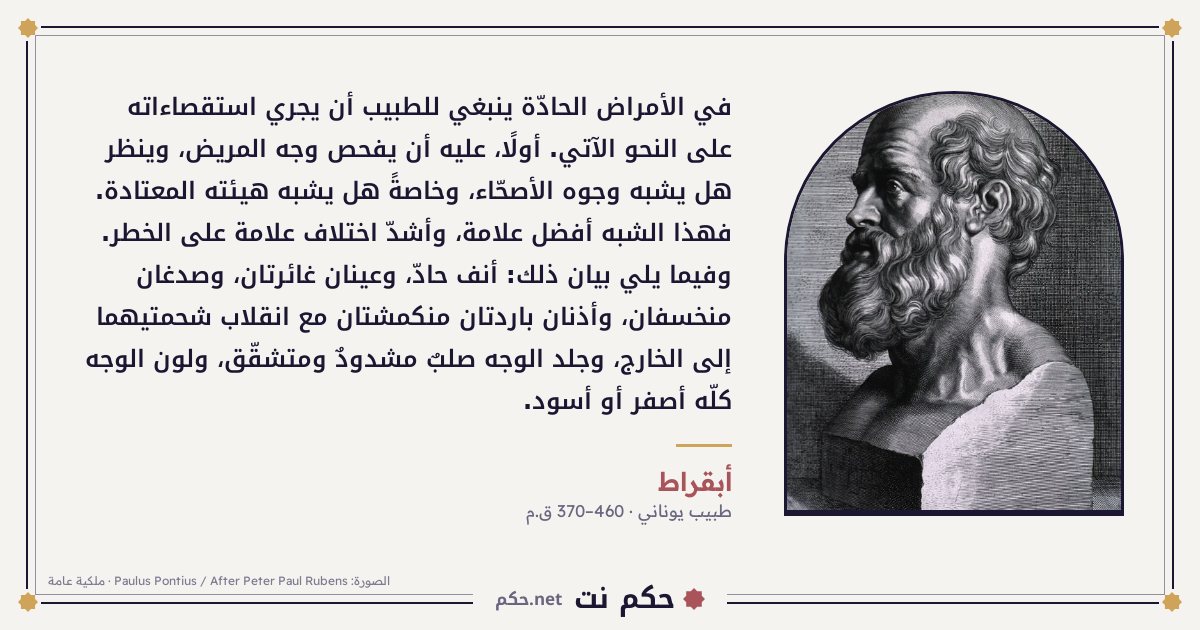
أبقراط
طبيب يوناني · 460–370 ق.م. له 148 حكمة في الموقع.
الصورة: Paulus Pontius / After Peter Paul Rubens