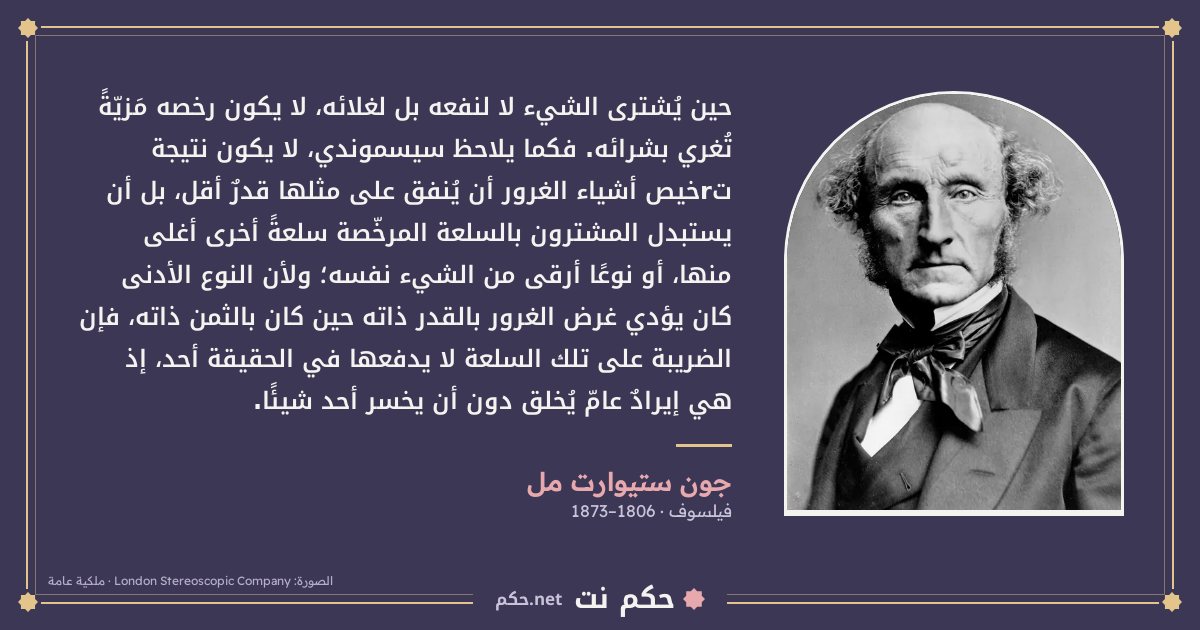
حين يُشترى الشيء لا لنفعه بل لغلائه، لا يكون رخصه مَزيّةً تُغري بشرائه. فكما يلاحظ سيسموندي، لا يكون نتيجة تrخيص أشياء الغرور أن يُنفق على مثلها قدرٌ أقل، بل أن يستبدل المشترون بالسلعة المرخّصة سلعةً أخرى أغلى منها، أو نوعًا أرقى من الشيء نفسه؛ ولأن النوع الأدنى كان يؤدي غرض الغرور بالقدر ذاته حين كان بالثمن ذاته، فإن الضريبة على تلك السلعة لا يدفعها في الحقيقة أحد، إذ هي إيرادٌ عامّ يُخلق دون أن يخسر أحد شيئًا.
النص الأصلي بالإنجليزية
“When a thing is bought not for its use but for its costliness, cheapness is no recommendation. As Sismondi remarks, the consequence of cheapening articles of vanity, is not that less is expended on such things, but that the buyers substitute for the cheapened article some other which is more costly, or a more elaborate quality of the same thing; and as the inferior quality answered the purpose of vanity equally well when it was equally expensive, a tax on the article is really paid by nobody: it is a creation of public revenue by which nobody loses.”John Stuart Mill — Principles of Political Economy, with Some of Their Applications to Social Philosophy (1862)